استشاري جراحات المياه البيضاء وتصحيح الابصار وعلاج جفاف العيون
Many patients are interested in knowing the clinical indications and cost of lens implant surgery, as it represents a definitive solution for complex refractive errors and dense cataracts. While conventional optical aids offer only temporary correction, surgical lens implantation is an advanced ophthalmic intervention aimed at permanently restoring optical quality and significantly improving visual acuity in patients with severe visual impairment.
This technique serves as a permanent alternative to corneal laser ablation (LASIK) in contraindicated cases, completely removing lens opacities or correcting extreme spherical and cylindrical errors. Driven by medical advancements in 2026, lens implant surgery has emerged as the most sustainable ophthalmic modality for restoring full optical clarity.
Clinical Classification of Intraocular Lens Procedures

Intraocular lens implantation represents a transformative development in anterior segment ophthalmic surgery, offering a definitive resolution for complex optical pathologies where traditional measures are inadequate.
Medically, lens implant surgery is classified into two primary operative branches depending on the patient's diagnostic profile:
- Phakic Intraocular Lenses (ICL): Known as "additive" phakic lenses, where an ultra-thin Collamer lens is positioned in the posterior chamber over the crystalline lens without removing natural ocular tissue. This is the optimal intervention for severe myopia or pathologically thin corneas, delivering high-definition (HD) visual acuity without external correction.
- Pseudophakic Cataract Surgery (IOL): The standard microsurgical protocol for lens opacification (cataracts). The cloudy natural crystalline lens is emulsified and extracted, then replaced with an artificial intraocular lens. This permanently prevents secondary cataract recurrence and simultaneously corrects presbyopia and refractive errors.
Medical Evidence: Clinical reports from WebMD highlight that intraocular Collamer lens (ICL) technology is a pivotal alternative for candidates disqualified from LASIK due to low corneal pachymetry or chronic dry eye syndrome. Because it preserves corneal architecture, it offers stable photopic and scotopic contrast sensitivity superior to surface ablation.
Diagnostic Indications: Intraocular Implantation vs. Corneal Ablation

Ophthalmic surgeons recommend lens implant surgery as an alternative to corneal refractive surgeries (LASIK/PRK) when standard laser ablation presents safety risks. Primary clinical indications include:
- High-degree axial myopia exceeding -8.00 to -10.00 diopters.
- Insufficient corneal thickness (low pachymetry values).
- Chronic ocular surface disease or severe dry eye syndrome.
- Pathological corneal biomechanics or irregular astigmatic topography.
- Presbyopia management in patients over forty seeking distance and near independence.
Intraocular Lens (IOL & ICL) Biomaterial Typology
Prior to performing lens implant surgery, selecting the optimal intraocular prosthetic is vital. Best Ophthalmologist range from monofocal, multifocal, and trifocal designs to toric models for astigmatism, alongside phakic ICLs.
Clinical Insights: According to the Mayo Clinic, technological evolution in intraocular lens biomaterials provides customized refractive profiles. Selecting between monofocal or presbyopia-correcting multifocal prosthetics requires comprehensive biometry and lifestyle-specific evaluation.
Comparative Prosthetic Lens Specifications
|
Lens Type |
Primary Clinical Application |
Key Advantages |
Clinical Notes |
|
Monofocal Lenses |
Cataract extraction & baseline correction |
Excellent optical quality for distant focal points |
Reading glasses typically required for near tasks |
|
Multifocal Lenses |
Cataract extraction & presbyopia correction |
Simultaneous near and distant visual clarity |
Minimizes dependence on spectacle correction |
|
Extended Depth of Focus (EDOF) |
Cataract extraction & intermediate vision |
Seamless intermediate-to-distance visual continuity |
Superior contrast performance across variable lighting |
|
Toric Lenses |
Astigmatism management |
Compensates for regular corneal toricity |
Available in monofocal, EDOF, or multifocal platforms |
|
Phakic Lenses (ICL) |
Severe refractive error (Myopia/Hyperopia) |
Preserves natural lens and corneal tissue |
Indicated for thin corneas or LASIK-ineligible patients |
Femtosecond Laser-Assisted Surgical Protocol
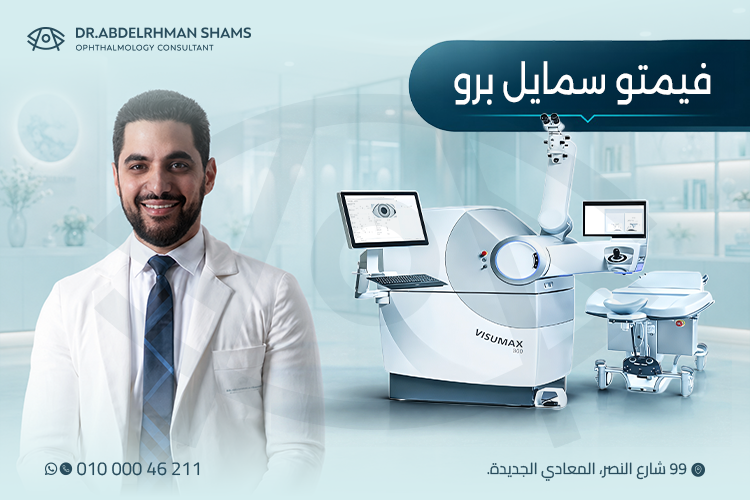
Modern femtosecond laser-assisted lens implant surgery is a minimally invasive, painless intervention requiring approximately 10 to 15 minutes under topical anesthetic eye drops. The surgical protocol comprises:
- Computer-Guided Micro-Incision: The femtosecond laser executes programmed, precise corneal incisions, promoting rapid epithelial closure and minimizing infection risk.
- Laser Capsulotomy & Phacofragmentation: The laser fragments the crystalline lens into micro-segments, decreasing the cumulative ultrasonic energy needed inside the anterior chamber and protecting endothelial cells.
- Intraoperative Astigmatic Keratotomy: Arcuate incisions can be placed during the laser stage to manage low-grade corneal astigmatism.
- Prosthetic Implantation: The foldable intraocular lens is delivered through the sub-3mm incision, unfolding precisely into the capsular bag or ciliary sulcus.
Clinical Risk-Benefit Analysis and Safety Profile
Evaluating the clinical prognosis of lens implant surgery requires analyzing both physiological advantages and operative considerations:
Comprehensive Prognostic Assessment
|
Clinical Parameter |
Therapeutic Advantages |
Surgical Risks & Considerations |
|
Success Rate |
Exceeds 98%; established global safety track record. |
Complication rates remain $<1\%$ under sterile protocols. |
|
Optical Quality |
Delivers HD visual acuity; corrects extreme myopia. |
Transient photic phenomena (glare/halos) may occur initially. |
|
Longevity |
Lifelong stability; synthetic biomaterials do not degrade. |
Rare prosthetic decentration requiring minor realignment. |
|
Recovery Dynamics |
Rapid functional recovery within 48 to 72 hours. |
Requires adherence to topical antibiotic and steroid regimens. |
|
Surgical Safety |
Femtosecond precision minimizes mechanical trauma. |
Minimal risk of transient post-operative ocular hypertension. |
|
Reversibility |
Phakic ICLs are fully removable and exchangeable. |
Higher procedural cost relative to excimer laser ablation. |
|
Cataract Resolution |
Permanently resolves crystalline lens opacification. |
Requires ultra-precise pre-operative biometry and sizing. |
Operative Duration, Clinical Prognosis, and Efficacy Rates
The duration and technical delivery of lens implant surgery varies slightly depending on whether Phakic ICLs or pseudophakic IOLs are utilized:
- Phakic ICL Procedures: Usually require approximately 30 minutes per eye, often scheduled sequentially with a 1-to-2 week interval. The lens is placed through a peripheral micro-incision behind the iris without tissue ablation.
- Prognosis & Success Rates: Lens replacement demonstrates a clinical success rate exceeding 98%. Modern micro-incisional surgery permits rapid functional visual rehabilitation within 15 to 30 minutes of operative time.
Financial Assessment and Cost Determinants in Egypt

Determining the economic valuation of lens implant surgery in Egypt (starting from 30,000 EGP per eye in 2026) depends on multiple parameters:
- Lens Technology & Manufacturing: Advanced hydrophobic acrylics, EDOF, multifocal, or toric designs (American, European, or Indian origin) influence total expenditure.
- Surgical Modality: Femtosecond laser-assisted cataract surgery (FLACS) carries different cost structures compared to standard phacoemulsification due to advanced digital docking systems.
- Surgeon's Sub-specialty Expertise: High surgical volume and clinical precision significantly improve outcomes; Dr. Abdel Rahman Shams is widely recognized in this sub-specialty for applying rigorous diagnostic workflows.
- Operative Center Facilities: Operating theater air filtration (HEPA), surgical microscopes, and advanced sterilization protocols dictate overall procedural quality.
Patient Case Review and Post-Operative Visual Outcomes
Refractive dependence on spectacles severely limited my active lifestyle, and severe myopia combined with inadequate corneal thickness rendered me ineligible for surface laser ablation. Following specialized consultations, I selected Dr. Abdel Rahman Shams at his Maadi clinic to undergo lens implant surgery.
The process began with comprehensive corneal topography and anterior chamber biometry. Dr. Abdel Rahman detailed the surgical mechanism and safety parameters of intraocular correction.
The surgical procedure was completed in under 15 minutes under topical anesthesia with no discomfort. Visual improvement was immediate following the protective shield removal. Full functional recovery was achieved within 48 hours. Post-operative visual acuity remains significantly superior to pre-operative spectacle-corrected vision
الاسئله الشائعة
The procedure is performed under local anesthesia (drops), the patient feels no pain, and it takes only about 10 to 15 minutes.
The lenses are made of "biocompatible" materials, meaning that the body does not reject them and they do not cause allergies, and they are designed to last a lifetime.
Improvement begins the very next day, and vision stabilizes completely within one to two weeks.
The procedure is performed under local anesthesia (drops), the patient feels no pain, and it takes only about 10 to 15 minutes.