استشاري جراحات المياه البيضاء وتصحيح الابصار وعلاج جفاف العيون
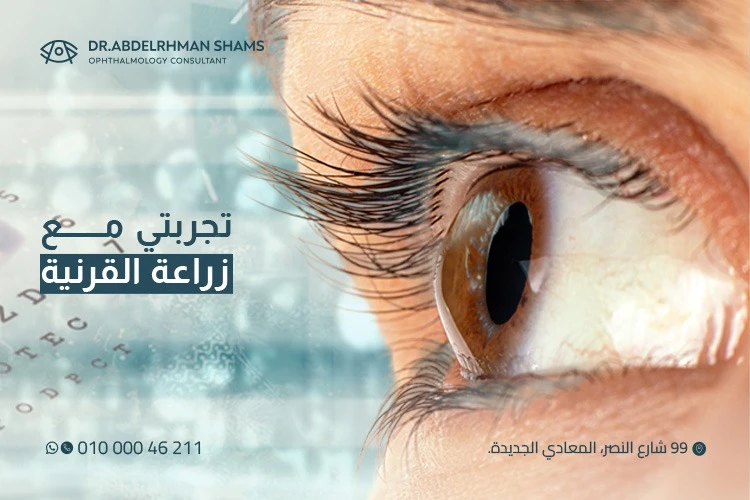
Imagine waking up one day to find that the world around you has lost its sharpness, replaced by a persistent, cloudy haze that glasses can no longer fix. For many, this is the frightening reality of severe corneal disease. However, restoring your sight is entirely possible.
A successful corneal transplant experience goes beyond just the surgical procedure; it is a journey of regaining your independence, guided by the hands of an expert surgeon. Under the exceptional care of specialists like Dr. Abdelrahman Shams, countless patients have transitioned from a life of blurred vision to one of clarity and renewed hope.
In this comprehensive medical guide, we will explore everything you need to know about keratoplasty (corneal transplantation), review a real-life patient's corneal transplant experience, discuss recovery timelines, and explain why choosing the right specialist is the most critical decision in your treatment journey.
What is a Corneal Transplant (Keratoplasty)?

Before diving into patient stories and the nuances of the corneal transplant experience, it is essential to understand the medical foundation of the procedure itself.
For your vision to be crisp and clear, the cornea—the transparent, dome-shaped front surface of the eye—must remain smooth, healthy, and entirely clear. When the cornea becomes scarred, swollen, or severely damaged, light cannot properly focus into the eye, resulting in distorted and blurry vision.
Several eye conditions and injuries can cause irreversible damage to the cornea, including:
- Keratoconus: A progressive disease where the cornea thins and bulges into a cone shape.
- Severe Eye Infections: Bacterial or viral infections that leave deep scarring.
- Ocular Trauma: Physical injuries or chemical burns to the eye's surface.
- Previous Eye Surgeries: Complications from previous operations that lead to corneal decompensation.
When conservative treatments fail, the only definitive solution is a corneal transplant. During this procedure, the ophthalmic surgeon carefully removes the diseased or damaged corneal tissue and replaces it with clear, healthy donor tissue.
When Does Vision Improve After a Corneal Transplant?
A common question among patients preparing for their surgery revolves around the recovery timeline. It is important to know that a successful corneal transplant experience requires patience. The healing process is gradual, and vision improvement does not happen overnight.
Typically, the timeline for visual recovery ranges from a few weeks to up to a year. The exact duration depends heavily on several critical factors:
- The Type of Transplant: Full-thickness transplants (Penetrating Keratoplasty) generally take longer to heal than partial-thickness procedures (like DSEK or DMEK).
- Patient Compliance: Strictly following the surgeon's postoperative instructions, especially regarding the use of prescribed eye drops and attending follow-up appointments.
- General Health: The patient's overall ocular and systemic health.
As the transplanted donor tissue integrates and heals with your natural eye tissue, your ability to focus light onto the retina improves. In the initial weeks post-surgery, it is completely normal to experience blurry vision, light sensitivity, and mild discomfort. These symptoms gradually subside as the eye stabilizes.
The Impact of Smoking on Your Corneal Transplant Experience
Beyond the well-documented systemic risks like heart disease and lung cancer, smoking has a severely detrimental impact on ocular health and surgical outcomes.
Smoking significantly increases the risk of graft rejection and dramatically delays the wound-healing process. According to a notable 2015 medical study evaluating the impact of smoking on corneal transplant patients, individuals with a history of smoking demonstrated a notably higher rate of graft failure.
Furthermore, the study highlighted that younger smokers (under the age of 54) experienced even higher rates of transplant failure compared to their non-smoking counterparts. Quitting smoking before and after your procedure is a vital step in ensuring a positive corneal transplant experience.
Why Egypt is a Top Destination for Corneal Transplantation

Corneal transplants are performed worldwide, but Egypt has rapidly emerged as a leading destination in the Middle East and North Africa (MENA) region for complex ocular surgeries. Patients achieve exceptional success rates here due to several distinct advantages:
- World-Class Medical Expertise: Egypt is home to highly skilled, internationally recognized ophthalmologists, such as Dr. Abdelrahman Shams, who brings academic rigor and extensive surgical experience to the operating room.
- Advanced Surgical Technology: Top-tier clinics in Egypt utilize the latest cutting-edge technologies and microsurgical techniques to increase success rates and minimize the risk of complications, including graft rejection.
- Cost-Effectiveness: The cost of advanced eye care in Egypt is highly competitive compared to Europe or North America, making it an attractive destination for medical tourism without compromising on quality.
- Comprehensive Post-Operative Care: Elite centers provide rigorous follow-up care, which is crucial for monitoring the graft and ensuring a smooth recovery.
A Real Patient's Corneal Transplant Experience
To truly understand the impact of this surgery, let us look at a real-life corneal transplant experience.
Mrs. Abeer had been suffering from a severe ocular inflammation that caused deep scarring on her cornea. Over time, her vision deteriorated significantly, affecting her daily life and independence. After receiving multiple recommendations, she booked an appointment with Dr. Abdelrahman Shams.
During the comprehensive examination, Dr. Shams accurately diagnosed her condition and gently explained that a corneal transplant was the best viable option to save her sight. Naturally, Mrs. Abeer felt anxious about the prospect of an eye transplant. However, Dr. Shams took the time to answer all her questions in detail, thoroughly explaining the procedure, the expected recovery, and the safety protocols in place. His empathetic yet highly professional approach gave her the confidence she needed to proceed.
Following the surgery, Mrs. Abeer experienced the expected initial blurriness. But through her dedication to Dr. Shams' postoperative care plan and routine follow-ups, her vision gradually cleared. Today, Mrs. Abeer has successfully regained her sight, marking her corneal transplant experience as a life-changing journey from darkness back to light.
The Best Corneal Transplant Doctor in Egypt: Dr. Abdelrahman Shams
The success of your corneal transplant experience relies almost entirely on the skill and expertise of your surgeon. Dr. Abdelrahman Shams is widely regarded as one of the premier specialists for treating keratoconus and performing complex corneal surgeries in Egypt and the Middle East.
His distinguished medical credentials include:
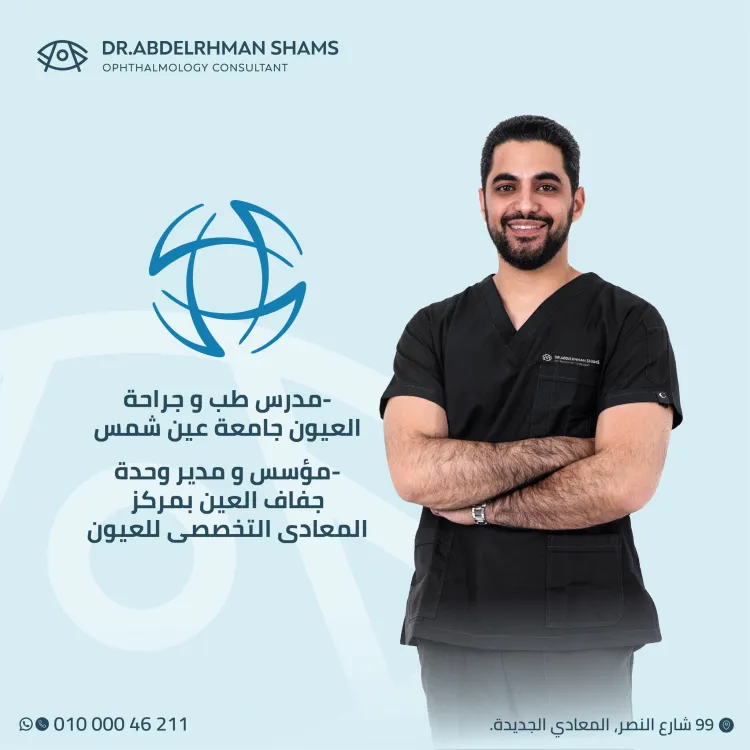
- Lecturer of Ophthalmology at the Faculty of Medicine, Ain Shams University.
- Member of the Royal College of Surgeons of Edinburgh.
- MD (PhD) in Ophthalmology from Ain Shams University.
- Senior Consultant in Cataract Surgery, Refractive Surgery, and Dry Eye Treatment.
- Member of the American Society of Cataract and Refractive Surgery (ASCRS).
- Fellow of the International Council of Ophthalmology (ICO), UK.
- Member of the International Society of Refractive Surgery (ISRS).
- Member of the European Society of Cataract and Refractive Surgeons (ESCRS).
- Member of the Egyptian Ophthalmological Society.
- Founder of the Dry Eye Unit at the Maadi Specialized Eye Center.
👉 Ready to restore your vision? Do not leave your eye health to chance. Book your consultation with Dr. Abdelrahman Shams today by calling (01118886541).
Cost of a Corneal Transplant in Egypt
Understanding the financial investment is a key part of preparing for your surgery. While the starting costs for certain stabilizing procedures, like intrastromal corneal ring segments, might begin around 18,000 EGP at the center, the exact cost for a full corneal transplant fluctuates based on the specific needs of the patient.
Several factors influence the final cost of the procedure:
- Patient's General Health: Specific medical conditions that require specialized monitoring.
- Surgical Facility: The hospital or specialized center where the surgery takes place.
- Surgeon's Expertise: The fee reflects the high level of skill of a specialized consultant.
- Pre- and Post-Operative Testing: Necessary diagnostic imaging (like corneal topography) and lab tests.
- Hospital Stay: The cost of admission and nursing care.
- Anesthesia: Fees associated with the anesthesiologist.
- Unilateral vs. Bilateral: Whether the surgery is being performed on one eye or both.
Because every patient's eye is unique, it is impossible to provide a single, fixed price for everyone. However, Dr. Abdelrahman Shams’ clinic provides highly competitive pricing combined with elite-level care.
Read more about Best Eye Doctor in Egypt
Conclusion: Take the First Step Toward Better Vision
Reading about a positive corneal transplant experience is the first step; taking action is the next. If you or a loved one are struggling with severe vision loss due to corneal damage, there is a clear path forward. We highly recommend consulting with a highly skilled and specialized ophthalmologist to explore your options safely.
Under the expert care of Dr. Abdelrahman Shams, you are not just a patient; you are a partner in the journey to restore your vision.
Take control of your eye health today. You can easily schedule a comprehensive eye examination with Dr. Abdelrahman Shams by calling (01118886541). Alternatively, you can reach out to the clinic, and a dedicated customer service representative will contact you promptly to assist with your booking and answer any immediate questions.
Read more about The Treatment of Weak Vision
الاسئله الشائعة
No, corneal transplant surgery is not painful during the procedure itself, as it is performed under local or general anesthesia, ensuring complete patient comfort. The patient may experience some mild pain, redness, or itching after the anesthesia wears off, but this can usually be managed with mild painkillers and resolves within a few days to a week.
Surgical success rates vary considerably (often ranging from 70% to over 95%) depending on the type of procedure, the surgeon's experience, and the patient's overall health. In complex surgeries such as open-heart surgery, success rates can reach 98%, while cancer surgeries depend on the stage of the disease. You should consult your doctor to determine the exact success rate for your specific case.
The face can be washed very carefully, avoiding the eyes completely, for the first few days. Showering and carefully washing the hair are permitted one to two days after the procedure. Water, soap, and shampoo must be kept away from the eyes for at least a week. Avoid rubbing or pressing the eyes, but a damp washcloth can be used to clean the face.